Home · Costs & Insurance
What HVAC costs in Pueblo, and how insurance treats it
How much does HVAC service cost in Pueblo, and does insurance cover it?
Published national guides put common HVAC repairs between $150 and $650 for the parts that fail most, capacitors, igniters, motors, and refrigerant work, a furnace replacement commonly between $2,500 and $6,500, and a full system replacement between $5,000 and $12,500 depending on class. Pueblo adds two local facts to those anchors. Its housing runs a dual stock, furnaces paired with refrigerated AC in some homes and with evaporative coolers in others, and the systems price in different bands, so the first question on any quote is which system it prices. And its dry, dusty conditions foul filters and burners faster than humid climates do, which shortens honest maintenance intervals and pulls repair versus replace thresholds earlier on neglected equipment. On insurance, wear and failure are maintenance and are not covered; storm and lightning damage to equipment can be a claim, documented by the event. The written estimate after diagnosis is the number that matters.
Pueblo pricing starts with a census question: which cooling system does the house run? The refrigerated and evaporative stocks price in different bands for repair and replacement alike, and a quote that does not say which it is pricing has not priced your house. The published anchors: common repairs $150 to $650, furnace replacement $2,500 to $6,500, full refrigerated system replacement $5,000 to $12,500, with evaporative work running below the refrigerated bands in both repair and replacement. The second local variable is cadence: Pueblo's dry dust fouls filters, coils, and burners faster than the guides' average climate, so maintained equipment follows the anchors and neglected equipment arrives at the replace threshold years early. The written diagnosis, with the failed part and the system's condition stated, is what a quote should hang from.
Compiled from published national guides and local data; reviewed by the Arkansas River Heating and Air research team. Last reviewed November 16, 2026.
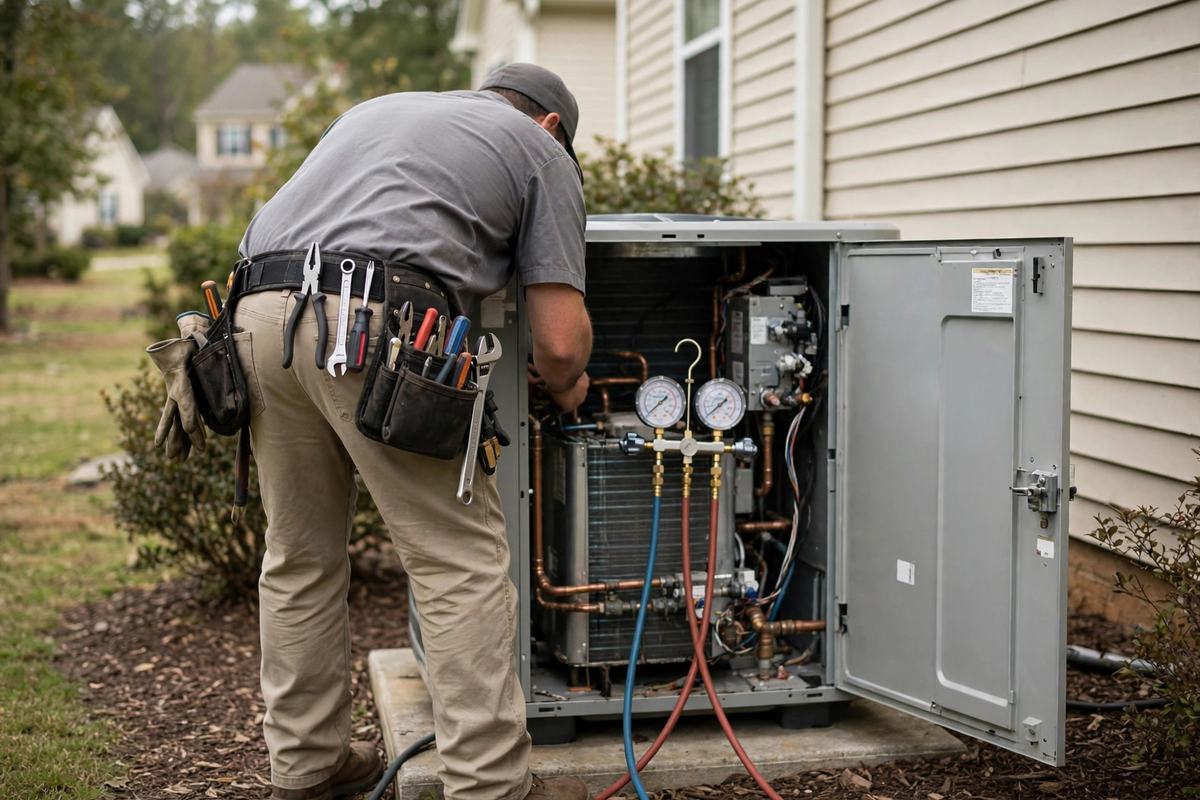
Typical cost ranges
| Job | Typical range | What moves it |
|---|---|---|
| Common repair: igniter, capacitor, motor, controls | $150 to $650 | The guide band for the parts that fail most. Diagnosis first; a part quoted before the failure is proven is a guess. |
| No-heat emergency call, after hours | $250 to $800 | Priced as the emergency it is in a single digit market; the interim pipe protection protocol is part of the call, not an extra. |
| Evaporative cooler service and pad replacement | $120 to $450 | The dual stock's own band: pads, pump, and water line work, priced separately from refrigerated scopes and honestly so. |
| Furnace replacement | $2,500 to $6,500 | The guide band. Altitude sizing, venting condition, and duct state set the position inside it. |
| Full refrigerated system replacement | $5,000 to $12,500 | Priced against the consolidate question this market asks: one refrigerated system against the furnace plus cooler pair it would retire. |
Ranges are published guide figures, not a quote for your home. Your estimate is written after diagnosis and should name the failed part, the system it belongs to, evaporated or refrigerated, and the condition findings the price assumes.
How insurance pays for this work
The deductible question
HVAC and insurance meet at events, not at age: lightning and storm damage to equipment can be claims, documented by the outage timeline and the diagnosis, against a deductible commonly between $500 and $2,500. A furnace that dies of age in January is a budget event, not a claim, which is why Pueblo's calm season tune-up, with its written condition list, is the closest thing this trade sells to insurance. Keep the diagnosis paperwork with the house file; at resale, a documented system history is worth money in this market.
Request a callback
Prefer to talk later? Leave your details and an independent local pro will call you back. No charge to you, no obligation.
Arkansas River Heating and Air is a free referral service. Submitting this form connects you with independent local contractors who provide the work.